
French drain installation Thornton
French drain installation helps redirect groundwater away from foundations, low spots, and saturated landscaping. For properties dealing with standing water, soggy soil, or seepage near the home, this drainage method uses a gravel trench and perforated pipe to move water to a safer discharge point. It is a practical solution for protecting yards, reducing erosion, and limiting moisture buildup around exterior walls and hardscapes.
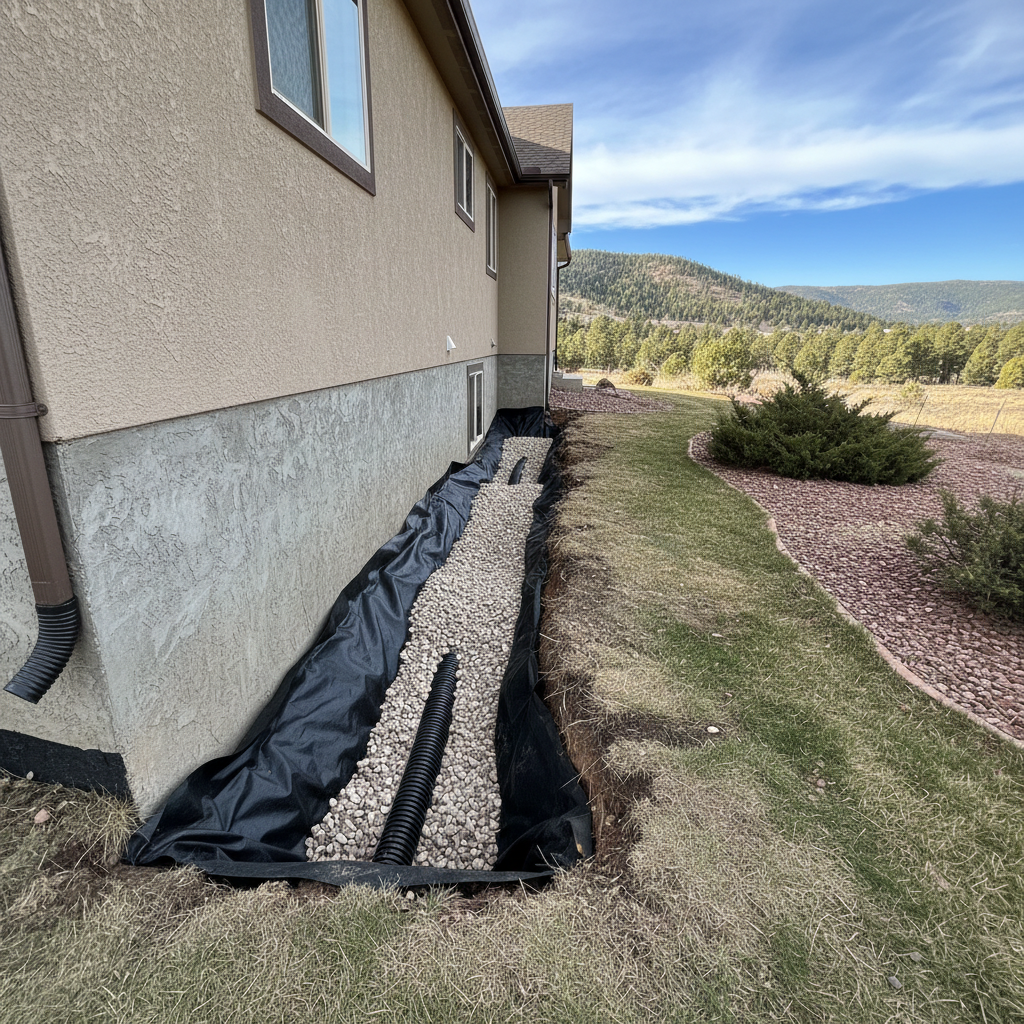
Why You Need French drain installation
French drain installation is a targeted drainage service designed to collect and redirect subsurface water before it causes bigger problems around your property. When soil stays saturated, water can pool in low areas, collect along foundations, damage landscaping, or create muddy sections that are difficult to use. A properly planned French drain uses a trench, drainage aggregate, filter fabric, and perforated pipe to intercept water and guide it away from trouble areas.
This service is often used where runoff gathers along the side of a house, behind retaining areas, near patios, or across a yard that never seems to dry out. The layout, trench depth, slope, soil conditions, and discharge location all matter because a drainage system only works well if water has a clear path to exit. French drain installation can also be paired with downspout extensions or other yard drainage improvements to address both roof runoff and groundwater movement.
For homeowners trying to stop repeated wet spots or protect the area around the foundation, French drain installation provides a durable, below-grade solution that improves drainage without relying on surface grading alone.
Signs You May Need This Service
Our Process
Identify where water enters and where it can safely discharge
Check trench slope so water can move consistently
Use filter fabric to help limit soil intrusion
Place perforated pipe and drainage stone at the proper depth
Restore surface areas after installation where needed
Local Insights
Across the Denver metro area, intense rain, spring snowmelt, and freeze-thaw cycles can expose drainage weaknesses fast. Many properties also deal with clay-heavy soils that drain slowly and hold moisture near foundations and low yard sections. French drain installation is especially useful where runoff and saturated soil repeatedly affect landscaping, walkways, or the perimeter of the home.
Pro Tip
Before installing a French drain, mark where water actually sits after a storm and note how long it takes to dry. That simple observation helps identify the best collection points and the direction water needs to move.
This matters because many drainage issues are caused by multiple water sources, not just one wet spot. A drain placed in the wrong location may collect too little water or discharge it into another problem area.
Do not trench near utility lines or tie a drainage system into an unsuitable outlet; call a professional when slope, discharge, or foundation moisture is involved.
Frequently Asked Questions
Experience & Track Record
Effective French drain installation depends on correct slope, drainage materials, and discharge planning rather than a one-size-fits-all trench.
Uziel Reyes
Founder, Kings Exteriors & Gutter Systems LLC
Credentials & Guarantees
Problems We Solve
- Standing water in low yard areas
- Soggy soil near the foundation
- Water seepage around exterior walls
- Erosion around planting beds or slopes
- Persistent muddy sections after storms
Pricing Factors
- Length and depth of the drain run
- Difficulty of trenching access
- Soil conditions and rock content
- Amount of surface restoration required
- Need for tie-ins with other drainage features
Need French drain installation?
Request a free estimate from our experienced team.