
Downspout drainage Westminster
Downspout drainage directs roof runoff away from the house so water does not dump next to the foundation or flood planting beds, walkways, and low areas. This service can include extensions, underground drain lines, and discharge planning to control where roof water goes. Proper downspout drainage helps reduce erosion, limit puddling, and keep heavy storm runoff from repeatedly damaging the same areas around the property.
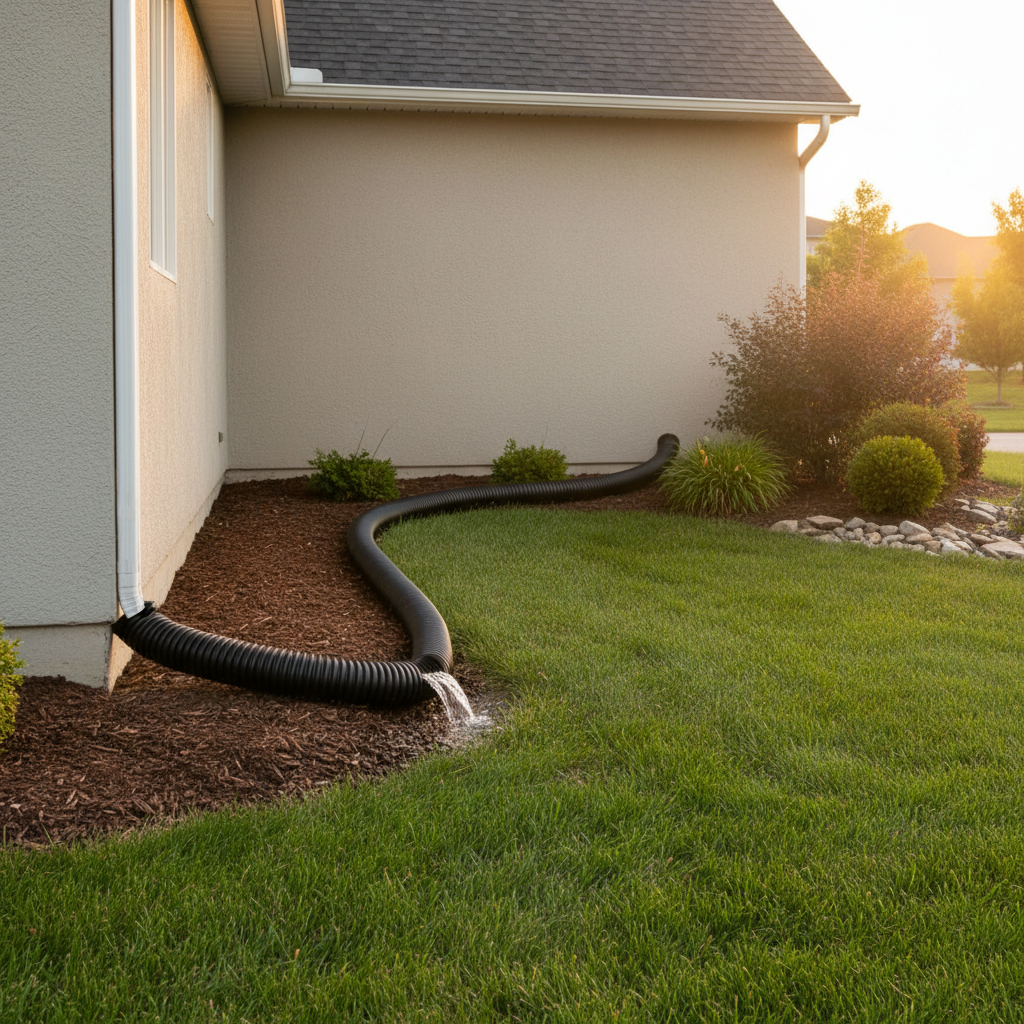
Why You Need Downspout drainage
Downspout drainage is one of the most important parts of managing water around a home because the roof can concentrate a large volume of runoff into just a few discharge points. When downspouts empty too close to the house, that water can saturate soil near the foundation, carve trenches into landscaping, stain concrete, or create slippery puddles near entries and walkways. A well-designed downspout drainage solution carries roof water farther away and sends it to a practical discharge location.
Depending on the site, this service may involve above-ground extensions, buried solid drain pipe, splash management, or connections to a broader yard drainage plan. The goal is not just to move water, but to move it without causing new problems at the outlet point. Proper slope, pipe route, debris control, and termination location all affect performance.
Downspout drainage is especially valuable for homes where repeated runoff has already started to erode soil, flood mulch beds, or collect near basement walls and slab edges. It can also improve the performance of gutters by giving stormwater a clear path away from the structure after it leaves the roofline.
Signs You May Need This Service
Our Process
Review roof runoff volume and downspout locations
Plan an outlet route that keeps water away from the structure
Use proper pipe slope for reliable drainage
Protect the system from clogging where possible
Confirm discharge will not create a new low-area problem
Local Insights
Front Range storms can dump a lot of water in a short time, and concentrated roof runoff often overwhelms the soil right beside the house. In communities from Aurora to Lakewood to Parker, expanding subdivisions and tight lot layouts can make discharge planning more important. Downspout drainage is a practical upgrade where gutter water is repeatedly causing puddles, washout, or moisture near foundations.
Pro Tip
During a rainstorm, check each downspout outlet to see whether water is flowing freely or backing up at the base. If an extension is already present, make sure it is still aimed downhill and not crushed or disconnected.
This helps you spot whether the problem starts at the gutter discharge point or farther out in the drainage path. Small alignment issues can quickly turn into foundation-side saturation during heavier storms.
Do not direct downspout runoff onto a neighbor's property, toward a walkway hazard, or into an outlet that cannot handle the water.
Frequently Asked Questions
Experience & Track Record
Successful downspout drainage work is based on matching roof runoff volume with a clear, properly sloped path to a safe discharge area.
Uziel Reyes
Founder, Kings Exteriors & Gutter Systems LLC
Credentials & Guarantees
Problems We Solve
- Roof water pooling beside the foundation
- Erosion below gutter downspouts
- Flooded mulch beds and planting areas
- Puddles on walkways or near entry points
- Runoff concentrating in one corner of the yard
Pricing Factors
- Number of downspouts being addressed
- Distance to a suitable discharge point
- Whether piping is above ground or buried
- Obstacles such as concrete, landscaping, or fencing
- Need to connect with other drainage improvements
Need Downspout drainage?
Request a free estimate from our experienced team.