
Addition roofing work Columbine
Addition roofing work covers the roof system for a new home addition or expanded exterior structure. The goal is to tie the new roof area into the existing home in a way that manages water correctly, matches the layout, and protects the new space below. This service is especially important where roof lines meet, flashing details change, or drainage patterns must be redirected to prevent leaks and premature wear.
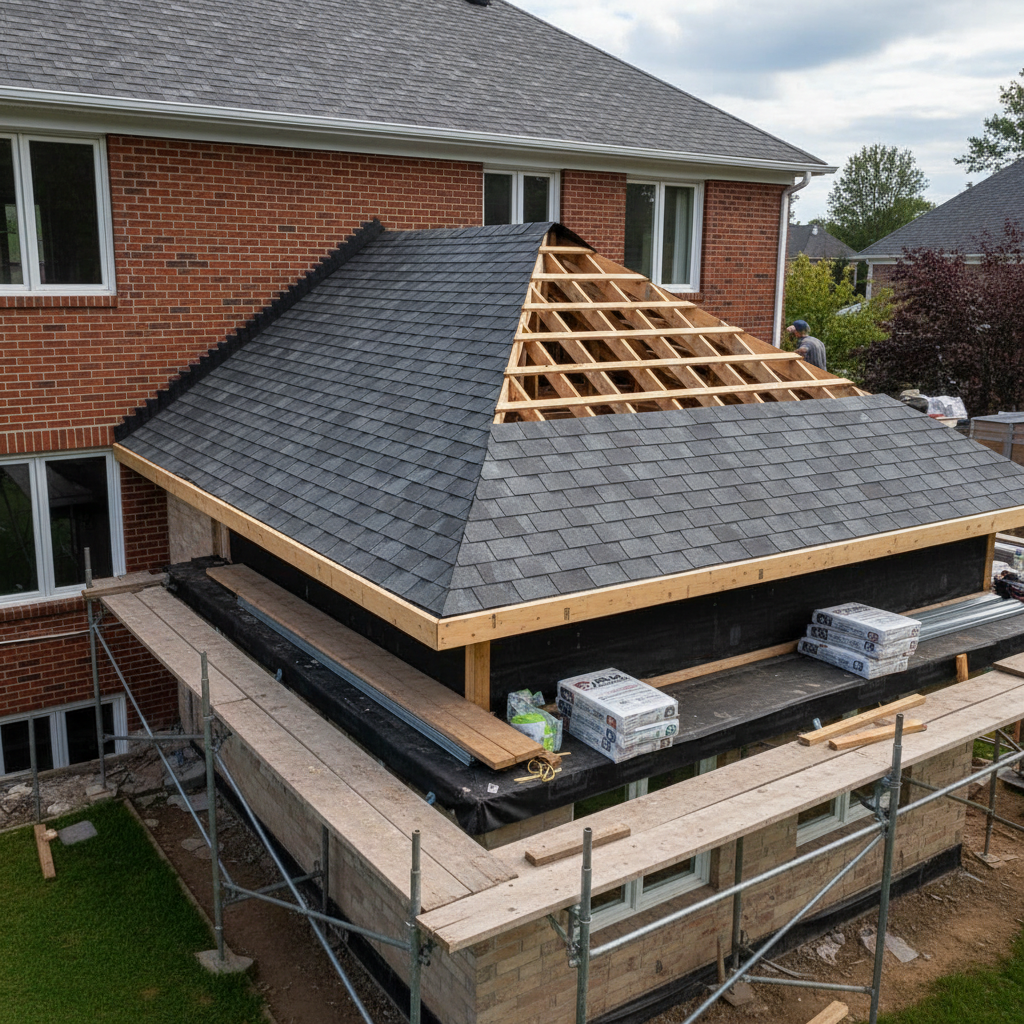
Why You Need Addition roofing work
Addition roofing work is more than simply extending shingles over a new structure. When a home addition is built, the new roof section has to connect properly with the existing roof, wall lines, and drainage system. That means careful attention to slope, tie-in details, flashing, transitions, underlayment, and the way water moves across both old and new roof areas.
This service is often needed for room additions, covered exterior spaces, bump-outs, and other structural expansions that change the roof footprint. A proper roof tie-in helps prevent common problems such as leaks at valleys, water backing up where new and existing roof sections meet, and mismatched drainage that overwhelms gutters or sends runoff toward siding and foundations.
Planning matters because addition roofing work affects more than the roof covering itself. Framing alignment, fascia connections, venting considerations, and gutter placement can all influence how well the finished roof performs. A good approach focuses on making the new section function as part of the whole house rather than as a separate patch. When the roof tie-in is done thoughtfully, the addition looks integrated and the home is better protected from weather at the most vulnerable connection points.
Signs You May Need This Service
Our Process
Review the existing roof layout and proposed addition connection points
Plan slope, drainage path, and tie-in details before installation
Install underlayment, flashing, and roofing materials to suit the transition
Coordinate fascia and gutter needs for the new roof section
Check vulnerable areas where old and new structures meet
Local Insights
Across Denver-area communities, sudden hail, wind-driven rain, and snowmelt can expose weak roof transitions quickly. Homes in places like Commerce City, Westminster, Castle Rock, and Highlands Ranch often need roof additions that handle sharp weather shifts and drainage surges. In this climate, tie-in and flashing details are especially important on any new roof section.
Pro Tip
Before finalizing an addition layout, watch where water currently leaves the roof during a storm and note downspout discharge points. That information can help reveal whether the new roof area may create runoff conflicts.
This matters because a well-placed addition can still develop leak or overflow issues if the roof connection and drainage path are not considered early. Existing water patterns often predict future trouble spots.
Do not assume a simple visual match is enough; roof tie-ins and flashing should be handled by a professional.
Frequently Asked Questions
Experience & Track Record
Addition roofing work depends on careful roof tie-ins, flashing details, and drainage planning so the new section performs as part of the overall structure.
Uziel Reyes
Founder, Kings Exteriors & Gutter Systems LLC
Credentials & Guarantees
Problems We Solve
- Leaks where a new roof meets the existing structure
- Poor drainage from added roof sections
- Improper flashing at roof-to-wall transitions
- Mismatched roof tie-ins causing uneven performance
- Water overshooting or overloading gutters
Pricing Factors
- Complexity of the roof tie-in design
- Size of the addition roof area
- Type of roofing materials involved
- Amount of flashing and transition work required
- Need for gutter changes or structural adjustments
Need Addition roofing work?
Request a free estimate from our experienced team.